

Showing 1 - 16 of 16 results
Getting South Coast kids excited about science and engineering

Safeguarding the future of Australia's nuclear medicine
The new facility will be built around a product line of ANSTO’s design – a new Technetium-99m generator – that will enable greater process automation than is possible with existing technology, leading to improvements in efficiency, quality and importantly the highest levels of production safety.
Plans to safely manage medical and research waste
ANSTO will make an application to the independent nuclear regulator, ARPANSA, to vary its license for its Interim Waste Store. The original operating license was approved in 2015, enabling the facility to hold what is called a TN-81 cask of intermediate-level radioactive waste that was safely repatriated from France in 2015.
Plans continue to repatriate medical and research radioactive waste
Australia’s nuclear agency ANSTO is continuing to lead planning efforts to repatriate what is called a TN-81 cask of intermediate-level radioactive from the United Kingdom in 2022.
Australia completes first phase of its waste repatriation project

Eduroam Service
ANSTO provides eduroam services for partnering institutions in Australia and around the world.

Melbourne Access Proposals
ANSTO’s user office in Melbourne offers access to the Australian Synchrotron, a world-class research facility with over 4,000 user visits per year. ANSTO seeks collaboration and partnerships with research organisations, scientific users and commercial users.
STEM-SAGE Initiative
Inspiring young women to be part of next generation of scientists.

Wasteform Scientist
Role at ANSTO
Innovator in energy and sustainability uses power of synchrotron light to make advances
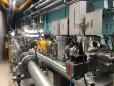
Medium Energy X-ray Absorption Spectroscopy Beamline (MEX-1 and MEX-2)
The Medium Energy- X-ray Absorption Spectroscopy beamlines will provide access to XANES and EXAFS data from a bending magnet source, optimised for cutting-edge applications in biological, agricultural and environmental science in an energy range that is not currently available at the Australia Synchrotron.

Connect with ANSTO's Women in STEM
Read about an ANSTO scientist and their work to prepare for a school project or interview.
Leveraging over half a century of knowledge in the safe management of radioactive waste
ANSTO's Chief Nuclear Officer shares insights on the safe management of Australia's nuclear waste.

Access to information
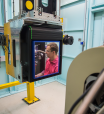
High Performance Macromolecular Crystallography Beamline (MX3)
The High Performance Macromolecular Crystallography beamline will enable the study of very small (sub-5 micrometre) or weakly diffracting crystals, providing a state-of-the-art high-throughput facility for researchers. MX3 will be able to study the structures of large proteins and protein complexes for virology, drug design and industrial applications via goniometer mounted crystals, in-tray screening, or via serial crystallography methods.