
2023 Think Science Competition Summary and Results
Think Science! 2023 Summary and Results


Showing 181 - 200 of 978 results
Think Science! 2023 Summary and Results
Robert Russell has been awarded his PhD
Below lists some useful programs for data reduction, search matching, analysis and structure visualisation of diffraction data.
Radiocarbon dating at ANSTO has supported new archaeological research conducted by Flinders University and the University of Queensland that describes significant earth mound features used for cooking that were created by Aboriginal people in the Riverland region of South Australia.
Sample environments, Data analysis, SpICE and SICS

ANSTO offers accelerator-based particle-induced gamma-ray emission techniques to determine total fluorine concentration in a range of solid materials and rapidly screen for the presence of PFAS (perfluoroalkyl and polyfluoroalkyl substances).

ANSTO has been tracking and publishing data on fine particle pollution from key sites around Australia, and internationally, for more than 20 years.
The new Micro Computed Tomography (MCT) beamline is the first instrument to become operational as part of the $94 million Project BRIGHT program, which will see the completion of eight new beamlines at ANSTO’s Australian Synchrotron.

The User Advisory Committee (UAC) are pleased to present this year's invited speakers.
Using neutron imaging techniques at ANSTO, researchers from Macquarie University have gained a better understanding of how corrosion forms and spreads through concrete that is commonly used in sewer pipes.

New mentor program offers deep brains trust to support the development of southern Sydney startups
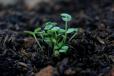
COVID-19 can’t stop kids with a passion for science and technology, with ANSTO launching our new online STEAM Club just in time for the school holidays.
Dr Mathew Johansen, an environmental scientist at ANSTO, presented in an online IAEA training workshop on Advanced Topics in Radiochemistry Techniques this week.
ANSTO has put together a robust multidisciplinary approach to understanding the impacts of nanomaterials, investigating a common food additive, E171 titanium dioxide, used primarily as a colouring agent in everyday foods.
Applications, Recent results, Publications.
A large group of ANSTO environmental scientists and collaborators have produced the first groundwater stable isotopes, ‘isoscapes’, intuitive maps with grid data, across NSW combining new and pre-existing isotope measurements.