

Showing 181 - 200 of 281 results
Breakthrough on virus infecting rare and endangered parrots
12,000 year temperature record
A new continuous record of temperature dating back 12,000 years provides an import resource in understanding current and future climate changes,
Training session highlighted an approach to calculate the ingested dose of radionuclides in seafood
Dr Mathew Johansen, an environmental scientist at ANSTO, presented in an online IAEA training workshop on Advanced Topics in Radiochemistry Techniques this week.
Synchrotron used to find structure of a new material that could be found on the surface of Saturn’s moon Titan
Synchrotron light reveals secrets of mystery McCubbin
Research finds possible key to long term COVID-19 symptoms
Researchers from La Trobe University have used the Australian Synchrotron to help identify a key mechanism in how SARS-CoV-2 damages lung tissue.
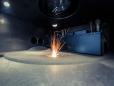
Multiscale modelling of laser-based additive manufacturing for the development of process–structure–property relationships
ANSTO is working with academic and industry partners on the development of multiscale numerical simulations of Laser Metal Deposition (LMD) 3D printing.
Analytical Experimental Officer
Role at ANSTO
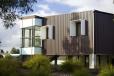
AUM2019 - Accommodation & Transport
Recommended accommodation and transport information.
Unsung Aussie Net Zero Hero
Australia’s Nuclear Science and Technology Organisation (ANSTO) is well-known for facilitating incredible science and creating life-saving nuclear medicines, but for the last 40 years it’s been quietly producing a largely unsung net zero hero: Neutron Transmutation Doped (NTD) silicon.
Exploring the role of water in the complex energy landscape of proteins
Understanding how a common food additive causes changes in the microbiome
ANSTO has collaborated on a study assessing the impact of the commonly-used food additive titanium dioxide (TiO2) on gut microbiota and inflammation.
Proposed new ANSTO waste facility
The independent nuclear regulator, ARPANSA, is currently accepting submissions about ANSTO’s planned $59.8 million Intermediate Level Solid Waste Storage Facility.
ARC Discovery project funding for geometry of the genome and the engineering of solid-state sodium batteries announced
Three ANSTO scientists are contributing to two recently awarded Australian Research Council Discovery Project grants.
ANSTO hosted workshop brings scientists together from Asia and the Pacific to address food fraud using nuclear science and technology
Award-winning research publication on superalloys
Industrial Engagement Manager at ANSTO and Professor in Advanced Structural Materials at the University of Sydney, Anna Paradowska is among the authors who contributed to a 2019 paper that was recently awarded the ASM International ASM Henry Marion Howe Medal in Metallurgical and Materials Transactions A.
Collecting ice cores for research
Dr Andrew Smith has just finished collecting ice cores and snow samples on the summit of Law Dome in Antarctica,

How to Access MX3
ITER update
Favourable conceptual design review may lead to expanded role for Australia on ITER diagnostics.