Watershed moment for nuclear medicine and ANSTO
ANSTO participates in nuclear medicine congress


Showing 161 - 180 of 280 results
ANSTO participates in nuclear medicine congress
ANSTO is working with government partners to ensure that radioactivity in drinking water supplied to Aboriginal communities is at levels considered safe for consumption.
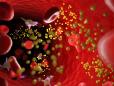
ANSTO expertise provides much-needed information about groundwater resources in the Mozambique capital and district.

Whilst at ANSTO’s Australian Synchrotron today, Prime Minister Scott Morrison announced new funding for the Australian Precision Medicine Enterprise (APME) Project. The Australian Government will contribute $23m in grant funding under the Manufacturing Collaboration Stream of the Modern Manufacturing Initiative (MMI) towards the $71.2m project.

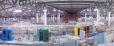

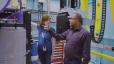
The Macromolecular Crystallography beamlines at the Australian Synchrotron (MX1 and MX2) are general purpose crystallography instruments for determining chemical and biological structures.
ANSTO’s unique capabilities in cosmogenic nuclides included in glacial study grant.
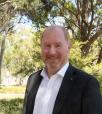
Professor Senden is an accomplished physical chemist and currently is the Pro Vice-Chancellor (Research Infrastructure and Entities) at the Australian National University.
ANSTO scientist, Dr Klaus Wilcken of the Centre for Accelerator Science, used cosmogenic nuclide dating to determine the ages of layered sand and gravel samples, in which seven footprints of the flightless bird, the moa, were found on the South Island in New Zealand in 2019.
Join us for this online webinar to explore and discuss the huge opportunities in growing a dynamic and impactful future nuclear workforce.
Following your experiment at ANSTO there are certain tasks that users can complete including a user feedback survey and claiming reimbursement for travel expenses.
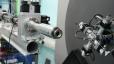
Sample environment types that are available on the Powder Diffraction beamline.
Dr Rezwanul Haque, now a senior lecturer at the University of the Sunshine Coast, received a national Young Scientist Award for his earlier research using nuclear techniques at ANSTO’s Australian Centre for Neutron Scattering to find cracks and signs of stress in riveted joints in sheet metal in car bodies.