

Showing 121 - 140 of 978 results
Stable Isotope Ratios
Stable isotopes are high useful in investigations of environmental samples.

ANSTO User Meeting 2023 - Themes

Environment
Unique landmark instrumentation and expertise are a hallmark of ANSTO’s sovereign capability, unavailable anywhere else in Australia. Our ability to identify the source of hazardous particulates in air, the age of water in aquifers and the detailed chemistry of toxic elements in complex soil and biota specimens are just some examples of ANSTO capability.
Successfully navigating the challenges of replacing a component in a nuclear reactor
The installation of a cold neutron source (CNS), a component that reduces the energy and speed of the neutrons from a research reactor for use in scientific instruments, was successfully completed in September 2024.
Neutron scattering a natural tool for food science and technology research
Ancient foods provide clues to past rainfall
Research has helped build a record of rainfall during the late Pleistocene and Holocene, and shed light on the strategies of Indigenous Australians to cope with a changing landscape.

STEAM Club Online
Learn. Create. Innovate
Enhancing the science of rivets earns researcher early career award
Dr Rezwanul Haque, now a senior lecturer at the University of the Sunshine Coast, received a national Young Scientist Award for his earlier research using nuclear techniques at ANSTO’s Australian Centre for Neutron Scattering to find cracks and signs of stress in riveted joints in sheet metal in car bodies.

Science Series Webinars
The ANSTO Science Series is a live and virtual meet-up that focuses on the key capacities of ANSTO’s people, partners and facilities and how they are meeting global challenges in sustainable industries, medicine, advanced manufacturing and in accelerating small business.
Deuteration Publications
Publications by ANSTO's National Deuteration Facility.

How to Access MX3
Synchrotron techniques reveal amount of carbon captured in microscopic seams of deep-sea limestone
A collaboration of Australian scientists has used ANSTO’s Australian Synchrotron to measure the amount of carbon that is captured in microscopic seams of deep-sea limestone, which acts as a carbon sink.
The use of Small angle X-ray and neutron scattering in food colloids
Update on PNG aquaculture project to improve the industry and benefit the local population
PNG researcher provides a progress update on an aquaculture project to improve the industry and benefit the local population
Sample Information
How to prepare samples for analysis on the Powder Diffraction beamline.
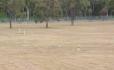
Little forest legacy site
ANSTO is responsible for the Little Forest Legacy Site (LFLS) located within the ANSTO Buffer Zone boundary. This site, formerly known as the Little Forest Burial Ground (LFBG), was used by the Australian Atomic Energy Commission (AAEC) during the 1960’s to dispose of waste containing low levels of radioactivity and beryllium oxide (non-radioactive) in a series of shallow trenches. There has been regular monitoring of the site since 1966 and the results have been reported in ANSTO’s environmental monitoring reports.