
Sustainability Manager - ANSTO
Nathan is the Sustainability Manager at ANSTO where his role incorporates environmental, financial, and social sustainability for the future.


Showing 1081 - 1100 of 1460 results
Nathan is the Sustainability Manager at ANSTO where his role incorporates environmental, financial, and social sustainability for the future.
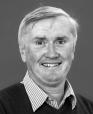
Dean was born in Wales and completed a PhD in X-ray optics at the Daresbury and Brookhaven synchrotrons. His first job was building a surface science beamline at Elettra in Italy.

Highlights of the Energy Materials Project.
New high energy ion microprobe beamline supports space research on the effects of radiation on astronauts.

Information about ANSTO’s COVID-19 Rapid Antigen Test Program


Incredible Insect Competition Winners of 2021. Digital colouring-in competition.
New researcher joins human health team to focus on role of acquired immunity in preventing disease
Use of nuclear techniques to benefit industry and consumers

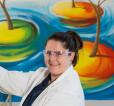
Kellie-Anne Farrawell is the Tritium Facility Officer who works within the Isotope Tracing in Natural Systems platform within Nuclear Science and Technology.

Detailed data on ANSTO electricity use and CO2 emissions for FY2022 - FY2023
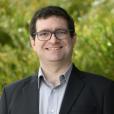
An commercial technical consultant with ANSTO, based at the Clayton Campus, Dr Robert Acres collaborates with industry partners to improve products and processes within small to large enterprises and acro


Role at ANSTO
Two ANSTO scientists were part of a research team led by the University of Wollongong, who are finalists for the 2019 NSW Environment, Energy and Science (DPIE) Eureka Prize for Environmental Research.
3D models of multilayered structures on engineering scale from nanoscale damage profiles.
A new study by researchers from Curtin University using the infrared (IR) and X-ray fluorescence microscopy (XFM) beamlines at the Australian Synchrotron has provided a better understanding of the chemical and elemental composition of latent fingermarks.