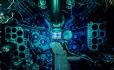
Australian researchers and clinicians have recently returned from Japan where they investigated the use of advanced radiation therapy for cancer using heavy ions at particle therapy facilities on a study tour .
Analytical Experimental Officer
Role at ANSTO
Multi-faceted approach to dating Australian Indigenous rock art from Kimberley region

Postdoctoral Research Fellow
Role at ANSTO
The Infrared microspectroscopy microscopes can record spectra from a range of different samples; from thin microtomed sections to polished blocks and embedded particles. This section highlights the types of samples that can be analysed using the IRM beamline

Director of the new Environment Research and Technology Group
Role at ANSTO
Dr Karina Meredith was appointed Director of the new Research and Technology Group for Environment effective 15 January 2024.

Laboratory Operations Manager, National Deuteration Facility
Role at ANSTO
New screening method developed to confirm if deuteration improves metabolic stability.
A number of sophisticated non-invasive nuclear and accelerator techniques were used to provide information about the origin and age of an Australian Aboriginal knife held in the collection of the Powerhouse Museum.
Researchers based at Monash University and the Swedish Museum of Natural History have pioneered the use of nuclear imaging techniques at ANSTO’s Centre for Neutron Scattering to resolve long-standing problems in plant evolutionary history linked to wildfires.
Lead, Food Materials Science; Instrument Scientist, QUOKKA (Small-Angle Neutron Scattering); Honorary Professor, CNFS, The University of Queensland
Role at ANSTO
Neutron Capture Enhanced Particle Therapy developed at ANSTO.
One of ANSTO’s most accomplished scientists and internationally recognised energy researchers, Prof Vanessa Peterson, has been awarded the Nancy Millis Medal for Woman in Science by the Australian Academy of Science this week.
Australia and Sri Lanks signs new partnership to fight chronic kidney disease.

Beamline Scientist – Advanced Diffraction & Scattering
Role at ANSTO
Insights about Mayan Empire relevant for current climate challenges
A rare collection of traditional Aboriginal wooden objects in varying degrees of preservation found along a dry creek bed in South Australia have been dated to a period spanning 1650 to 1830 at the Centre for Accelerator Science at ANSTO.
Radiation can be described as energy or particles from a source that travel through space or other mediums. Light, heat, and wireless communications are all forms of radiation.
Pagination