Shorebirds Competition 2020
A lesson in Science and Sustainability.


Showing 881 - 900 of 978 results
A lesson in Science and Sustainability.

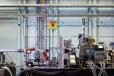
Samples on the X-ray fluorescence microscopy beamline at the Australian Synchrotron.
A new study by researchers from Curtin University using the infrared (IR) and X-ray fluorescence microscopy (XFM) beamlines at the Australian Synchrotron has provided a better understanding of the chemical and elemental composition of latent fingermarks.
Principal Research Scientist Andrew Smith is travelling to the Taylor Glacier in Antarctica with American collaborators on a 3-year National Science Foundation project now in its final year that involves mining tonnes of ice for palaeoclimate research.
Nuclear techniques will be crucial tools in the development of advanced materials that sustainably convert waste heat into useful forms of energy to benefit Australia.
A large collaboration of Australian and New Zealand researchers has established that a thin film technology can be used to monitor stormwater effectively and provides a way to translate the presence of metal contaminants into potential risks to aquatic ecosystems.
Australian clean energy technology company, entX Limited is taking advantage of ANSTO’s unique capacity to generate tailored radioisotope products in the OPAL multi-purpose nuclear reactor to advance a series of innovative projects.
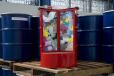
ANSTO has safely managed its radioactive waste for over 60 years. Waste is managed in accordance with national and international standards.

Dr Karina Meredith was appointed Director of the new Research and Technology Group for Environment effective 15 January 2024.

Modelling and experimentation - a powerful combination in probing mechanical properties of ion irradiated materials through nanoindentation.
Insights into the formation of deep river canyons mountain ranges in intra-tectonic plate areas by SAAFE Scholarship recipient and collaborators.
A rare collection of traditional Aboriginal wooden objects in varying degrees of preservation found along a dry creek bed in South Australia have been dated to a period spanning 1650 to 1830 at the Centre for Accelerator Science at ANSTO.
Routine transport of spent nuclear fuel