Pioneering collaboration advances nuclear medicine
This joint initiative at ANSTO has developed a new capability: solid surface radiolabelling to evaluate Auger emitting sources for next-generation targeted therapy.

Showing 721 - 740 of 978 results
This joint initiative at ANSTO has developed a new capability: solid surface radiolabelling to evaluate Auger emitting sources for next-generation targeted therapy.
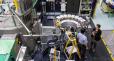
Wombat is a high intensity neutron diffractometer that is primarily used as a high-speed powder diffractometer, but has also expanded into texture characterisation and single-crystal measurement, particularly diffuse scattering.


Analysis of environmental samples (predominantly soils, groundwaters, vegetation and biota) for the presence of radionuclide via chromatographic separation methods.

ANSTO provides a list of journal, book, technical and conference publications associated with the Australian Centre for Neutron Scattering, and the Centre for Accelerator Science.

Unique opportunity to contribute to the long term conservation of Australia’s most iconic landmark: The Sydney Harbour Bridge.
Monica Hibberd and Hamish McDougall are working together on research into greener and more efficient energy and battery technology.
ANSTO, Australia’s knowledge centre for nuclear science and technology, connects STEM graduates with industry to work on real-world challenges through its FutureNow Scholarships for 2022.
Radiocarbon measurements at ANSTO’s Centre for Accelerator Science have supported research published that provided insights into what the environment was like for the Aboriginal artists who created rock art over intervals spanning 43,000 years.
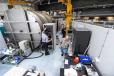
A sparrow with 257 parts weighing more than 29 tonnes arrives safely at ANSTO
International interest is building in Australia’s new multi-million-dollar radioactive waste processing facility at the Sydney campus of the Australian Nuclear Science and Technology Organisation (ANSTO).
ANSTO may provide travel and accommodation support to successful grant applicants from AINSE member organisations. Travel funds granted are to be used solely to cover the majority of the cost to travel to Sydney.
The Platypus instrument can be used to study all-manner of surface-science and interface problems, particularly related to magnetic recording materials and for polymer coatings, biosensors and artificial biological membranes.