Understanding disease - Causation and progression
This program uses ANSTO’s nuclear capabilities to identify, quantify, and monitor the mechanisms which cause, or influence the development and progression of chronic diseases.


Showing 601 - 620 of 978 results
This program uses ANSTO’s nuclear capabilities to identify, quantify, and monitor the mechanisms which cause, or influence the development and progression of chronic diseases.
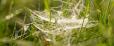
The Australian crab spider Saccodomus formivorus is the only spider known to weave a unique basket-like web; however, the key to its remarkable design and robust structure is unknown.
ANSTO is Australia’s nuclear centre of excellence. It has a mandated role to advise the Australian Government on all nuclear and science technology matters.
Nitrogen-doped ultrananocrystalline diamond (N-UNCD) is a promising material for future biological and electrochemical applications.
Australian and Taiwanese scientists have discovered a new molecule which puts the science community one step closer to solving one of the barriers to development of cleaner, greener hydrogen fuel-cells as a viable power source for cars.
Nuclear security experts and officials from Australia’s nuclear agencies have convened at the International Atomic Energy Agency’s (IAEA) headquarters in Vienna, Austria last week for the International Conference on Nuclear Security (ICONS).
This month ANSTO is opening its doors to 11 talented young people from across Australia as the two-year Graduate Program kickstarts.
Two of Australia’s leading science organisations, ANSTO and the National Measurement Institute (NMI), which share areas of common interest in both measurement and research, signed a MOU formalising collaboration on 6 March 2019.
Dr Helen Maynard-Casely will be taking neutron physics on a road trip
Senior electronics engineer from SESAME visits following donation of instrumentation to the Middle East's synchrotron in Jordan.
Australia’s new Mo-99 manufacturing facility reaches practical completion
ANSTO radiocarbon facilities and scientists are featured in a new IMAX documentary film released in the United States.
Southern Cross researcher Dr Alana Gall, who recently became an ANSTO research Fellow, has been awarded more than $640,000 to lead a research program focused on First Peoples' Cultural Medicines (also called bush medicine) in Australian healthcare.
ANSTO scientists will contribute to a new $1 million ARC Linkage Project grant to evaluate human responses to post glacial sea level rise at Red Lily, Arnhem land led by Griffith University.

At ANSTO we understand that diverse teams produce better outcomes – and we value the merit that a diverse perspective can bring to the quality and outcomes of our work, and the way we get the job done.