Schools' participation high for National Science Week
Just under 250 schools in Australia and one school in Malaysia will participate in a series of science-based competitions during to coincide with National Science Week in 2024.


Showing 61 - 76 of 76 results
Just under 250 schools in Australia and one school in Malaysia will participate in a series of science-based competitions during to coincide with National Science Week in 2024.
Dr Jessica Hamilton, a beamline scientist at the Australian Synchrotron, has won the Falling Walls Lab competition hosted by the Australian Academy of Science for her 3 minute presentation on a novel approach to using mining waste for carbon dioxide capture and a source of carbonate minerals. The event is held to deliver solutions to some of the most promising challenges of our time.
Dr Angus Cowan has been presented with the Stephen Wilkins Medal, which is awarded annually to a PhD student who completed an outstanding thesis based on work at ANSTO’s Australian Synchrotron.
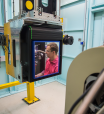
The High Performance Macromolecular Crystallography beamline will enable the study of very small (sub-5 micrometre) or weakly diffracting crystals, providing a state-of-the-art high-throughput facility for researchers. MX3 will be able to study the structures of large proteins and protein complexes for virology, drug design and industrial applications via goniometer mounted crystals, in-tray screening, or via serial crystallography methods.

The International Synchrotron Access Program (ISAP) is administered by the Australian Synchrotron and is designed to assist Australian-based synchrotron users to access overseas synchrotron related facilities.
Dr Linda Croton, a Research Fellow at Monash University, has been awarded the 2020 ANSTO Australian Synchrotron Stephen Wilkins Thesis medal for her outstanding work using synchrotron-based X-ray for brain imaging.
The Australian Government recently signed a landmark emissions reduction technology deal with Great Britain, which includes nuclear energy and clean hydrogen among the six key low emission technologies the two countries hope to advance.
A team of researchers including the University of Rochester, CSIRO and ANSTO has found methane emissions from human fossil sources have been greatly underestimated.
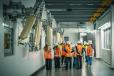
Principal Technical Consultant Michael Druce shares some personal insights on the design and construction of ANSTO's nuclear medicine facility.
Collaboration finds that old carbon reservoirs are unlikely to cause a massive greenhouse gas release in a warming world.
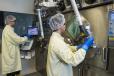
See details of previously published customer updates from our Health products team.