
Highlights - Magnetism
Highlights of the Magnetism Project.


Showing 61 - 80 of 123 results
Highlights of the Magnetism Project.


ANSTO User Meeting 2021 - Speakers

In space, without the protection of the magnetosphere, the type and dose of radiation is considerably different to what is naturally experienced on earth. However, it is the secondary particles of lower energies created when galactic and cosmic radiation interacts with shielding that is of concern for astronauts.

In collaboration with the French National Institute of Health and Medical Research (INSERM) and the French International Space Agency (CNES), ANSTO scientists are undertaking research on the radiobiological effects of secondary particles that are created when radiation interacts with the shielding on the International Space Station.
About 70 representatives from business and industry groups, local business chambers, councils and the education sector from southern Sydney heard about ANSTO’s Innovation Precinct.

Industrial Engagement Manager at ANSTO and Professor in Advanced Structural Materials at the University of Sydney, Anna Paradowska is among the authors who contributed to a 2019 paper that was recently awarded the ASM International ASM Henry Marion Howe Medal in Metallurgical and Materials Transactions A.
This joint initiative at ANSTO has developed a new capability: solid surface radiolabelling to evaluate Auger emitting sources for next-generation targeted therapy.
Neutron scattering instruments used by Japanese researchers.
Recent catastrophic Australian bushfires produced extremely high levels of fine particle pollution.

Australian Nuclear Science and Technology Organisation (ANSTO) is committed to protecting your personal information in accordance with the Privacy Act 1988 (Cth) (Privacy Act) and the Australian Privacy Principles.
ANSTO shared plans for an Innovation Precinct in southern Sydney at a breakfast event.
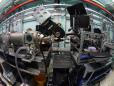
Technical information on the SAXS / WAXS beamline at the Australian Synchrotron.
The protein mapping workhorses of the Australian Synchrotron, Macromolecular and Microfocus crystallography beamlines, MX1 and 2, continue to support important biomedical research in the development of vaccines and new therapeutics.

Professor Vanessa Peterson, Senior Principal Research and Neutron Scattering Instrument Scientist and Leader of the Energy Materials Research project, has been awarded the Bob Cheary Award or Excellence in Diffraction Analysis by the Australian X-ray Analytical Association. She is the first female to be chosen for the award.