Search hero banner

Search results

Showing 41 - 60 of 81 results

Graduate Profile - Joshua Noiney

Fish farming is increasing globally to provide an affordable source of protein and income security for local communities. Joshua's research project aims to optimise production of tilapia to enhance food and nutritional security in PNG.

coming to visit lucasheights ansto

Visit our Sydney facilities

ANSTO's Sydney locations are home to the Open Pool Australian Light-water (OPAL) multi-purpose reactor, the Centre for Accelerator Science (CAS), the Australian Centre for Neutron Scattering, the National Research Cyclotron and the National Deuteration Facility.

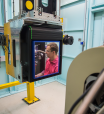
High Performance Macromolecular Crystallography Beamline (MX3)

High Performance Macromolecular Crystallography Beamline (MX3)

The High Performance Macromolecular Crystallography beamline will enable the study of very small (sub-5 micrometre) or weakly diffracting crystals, providing a state-of-the-art high-throughput facility for researchers. MX3 will be able to study the structures of large proteins and protein complexes for virology, drug design and industrial applications via goniometer mounted crystals, in-tray screening, or via serial crystallography methods.

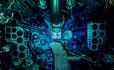
OPAL Reactor Core

What are radioisotopes?

Radioisotopes are widely used in medicine, industry, and scientific research. New applications for radioisotopes are constantly being developed.

ANSTO welcomes $13.9M critical minerals funding

Rare earth elements will be a key area of focus for the Australian Nuclear Science and Technology Organisation’s Minerals unit as it welcomes a $13.9 million funding allocation under the Australian Critical Minerals Research and Development Hub

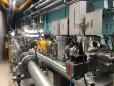
MEX Hutch A

Medium Energy X-ray Absorption Spectroscopy Beamline (MEX-1 and MEX-2)

The Medium Energy- X-ray Absorption Spectroscopy beamlines will provide access to XANES and EXAFS data from a bending magnet source, optimised for cutting-edge applications in biological, agricultural and environmental science in an energy range that is not currently available at the Australia Synchrotron.

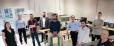
Detection and Imaging team

About us

The Detection & Imaging group builds on ANSTO’s 70-year history of scientific achievements and contributions in meeting the nuclear needs of industry, globally.

Pagination