Action plan to fight CKDu
Australia and Sri Lanka develop action plan to fight Chronic Kidney Disease killer


Showing 281 - 300 of 362 results
Australia and Sri Lanka develop action plan to fight Chronic Kidney Disease killer
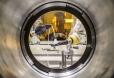
ANSTO manufacture and supply a range of radiopharmaceuticals, radiochemicals, kits and accessories for use in research, industry and the health sector.
Charcoal particles from recent bushfires in NSW were carried 50 kilometres by the wind, which has significance for fire history reconstruction.
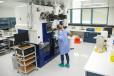
Research and development activity explores new, boutique radioisotopes, including positron, gamma and beta/gamma emitter. The aim is to provide material for the next generation of diagnostic and therapeutic radiopharmaceuticals

ANSTO is celebrating the official opening of HIFAR, Australia’s first nuclear reactor, sixty-five years ago.
Radiocarbon dating capabilities at the Centre for Accelerator Science have provided evidence of a 17,300-year old painting of a kangaroo from the Kimberley region.
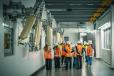
Jobs supported through the nandin Innovation Centre at ANSTO have skyrocketed 360 per cent since opening, with member businesses raising more than $3.9 million in capital, in a major boost for the local Sutherland Shire economy.
With world-class experts in groundwater and major contributions in this area over two decades, ANSTO completed a major project report on Improving groundwater sustainability and renewability using isotope hydrochemistry in NSW for the Department of Planning and Environment (NSW) and National Water Grid earlier in the year.
$80.2 million in new funding to expand the research capabilities of the Australian Synchrotron.
Modified component of green tea promises potential neuroblastoma treatment.
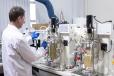
Biodeuteration involves the growth of microorganisms in a heavy water (deuterium oxide) culture medium supplemented with either a deuterated or hydrogenated carbon substrate, depending on the level of deuteration required. The biomass is harvested and the deuterated molecule (e.g. protein) is purified and characterised.
The protein mapping workhorses of the Australian Synchrotron, Macromolecular and Microfocus crystallography beamlines, MX1 and 2, continue to support important biomedical research in the development of vaccines and new therapeutics.