Tailorable nanoscale emulsions
Progress on tailorable nanoscale emulsion for a wide variety of applications including drug delivery


Showing 201 - 220 of 281 results
Progress on tailorable nanoscale emulsion for a wide variety of applications including drug delivery
This joint initiative at ANSTO has developed a new capability: solid surface radiolabelling to evaluate Auger emitting sources for next-generation targeted therapy.
Multi-million dollar Australian Cancer Research Foundation (ACRF) Detector launched at the Australian Synchrotron,
Researchers and industry partners from UNSW Australia, the Australian Centre for Nanomedicine, Children’s Cancer Institute and Inventia Life Sciences Pty Ltd have been awarded the 2021 ANSTO Eureka Prize for Innovative Use of Technology for their method to rapidly-produce 3D cell structures
Enhancing safety of trailer trucks among research projects
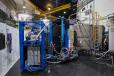
Sample environments, Data analysis, SpICE and SICS
Insights into the behaviour of structural materials in a molten salt environment
Ancient groundwater in Australia contributing carbon to food webs through surface water.
ANSTO, the home of Australia’s nuclear science expertise and the Powerhouse Museum, home of Australia’s excellence and innovation in the applied arts and sciences will collaborate on research projects, establish an Indigenous Cultural Research Scholarship and combine efforts on STEM outreach activities.
Dr Ceri Brenner appointed new leader of the Centre for Accelerator Science
International research led by Curtin University and supported by ANSTO, has identified and studied the first sauropod dinosaur gut contents found anywhere in the world. The stomach content was preserved with a reasonably complete skeleton of the Australian Cretaceous species Diamantinasaurus matildae found in Winton Queensland.
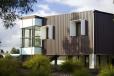
The Australian Synchrotron has an on-site Guesthouse for users and AS guests.

Detailed data on ANSTO electricity use and CO2 emissions for FY2022 - FY2023
In 2017, ANSTO's CEO signed a Memorandum of Understanding with Sri Lanka to work together to investigate the epidemiology of Chronic Kidney Disease of unknown origin (CKDu).
Part of the Large Hardon Collider
International researchers have used nuclear techniques at ANSTO - a centre for food materials science - to develop a methodology that could assist in the design of oleogel systems for food applications.
A team of researchers from ANSTO and University of Technology Sydney have set a record by conducting thin film experiments at 1100 degrees C.
Study shows for the first time that vegetation in the Windmill Islands, East Antarctica is changing rapidly in response to a drying climate.