Australian Synchrotron supports important palaeological cave art study in Borneo
Powder diffraction and X-ray fluorescence microscopy support investigation of pigments in rock art.


Showing 201 - 220 of 526 results
Powder diffraction and X-ray fluorescence microscopy support investigation of pigments in rock art.
General manager ANSTO Communications and Stakeholder Engagement was one of the presenters at the IAEA W4NSEC workshop
Study shows for the first time that vegetation in the Windmill Islands, East Antarctica is changing rapidly in response to a drying climate.
Research makes it possible to assess if and how rocky coasts, which make up the majority of the world’s coasts including Australia and New Zealand, will respond to changes in marine conditions.
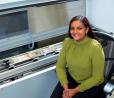
ANSTO has put together a robust multidisciplinary approach to understanding the impacts of nanomaterials, investigating a common food additive, E171 titanium dioxide, used primarily as a colouring agent in everyday foods.

ANSTO Synroc technology provides a safe, secure matrix for the immobilisation and final disposal of radioactive waste.
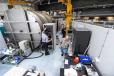
The Platypus instrument can be used to study all-manner of surface-science and interface problems, particularly related to magnetic recording materials and for polymer coatings, biosensors and artificial biological membranes.
Groundwater experts from ANSTO and UNSW have led a collaboration of Australian and American researchers to analyse the composition of deep, very old groundwater and develop a new conceptual framework that describes the degradation of carbon over time in the subsurface.
Australian and international researchers have used ANSTO’s Australian Synchrotron to confirm the presence of an unusual diamond found in stony meteorites.
ANSTO has contributed to international research on quasicrystals that opens the door to tailored magnetic materials.
ANSTO has provided supporting experimental evidence of a highly unusual quantum state, a quantum spin liquid (QSL), in a two-dimensional material.
An international collaboration led by The University of Sydney and supported by ANSTO has developed an advanced, innovative artificial intelligence application that could be used to help examine tissue samples and identify signs of disease/
Five exceptional female science communicators are part of a larger team who use skills in education and engagement to promote an interest in science amongst the public and students.
Accurate ‘fingerprinting’ tool to verify source of origin is in development with collaborators from academia and industry.

This scholarship recognises outstanding ability and promise in the field of nuclear science and technology, specifically as it applies to nuclear energy. Successful applicants will demonstrate a history of interest in nuclear energy and a desire to continue this interest.
Virtual activities celebrating the benefits of nuclear science and technology held for National Science Week
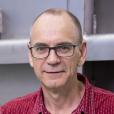
Stephen received his PhD (Physical Chemistry) from Griffith University in 1996.
ANSTO environmental scientists have alerted the scientific community of the critical need to monitor changes to ice containing potential nuclear fallout that reached Antarctica from 20th century atmospheric weapons testing.