Top Coder winner announced
Padstow North and Caringbah North selected as winners of ANSTO's Top Coder competition.


Showing 201 - 220 of 224 results
Padstow North and Caringbah North selected as winners of ANSTO's Top Coder competition.
Researchers from the University of New South Wales have developed a new type of rechargeable battery that uses protons as charge carriers, offering a safer and more environmentally friendly alternative to conventional lithium-ion batteries.

In January 2026, Mr Michael Quigley AM, ANSTO Board Chair, shared ANSTO's Statement of Intent with the Minister for Industry and Innovation, and Minister for Science.
A collaborative group including Monash has produced an ultra-thin and ultra-flexible organic solar cell for advanced wearable devices.
Ongoing media statements relating to nuclear medicine production.
ANSTO is participating in a major project to learn more about an important component of the atmosphere, the hydroxyl radical.
Investigators have verified and quantified the relationship between the Earth’s land biosphere and changes in temperature and provided evidence that temperature impacts the cycling of carbon between land, ocean and the atmosphere.
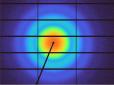
The Biological Small Angle X-ray Scattering beamline will be optimised for measuring small angle scattering of surfactants, nanoparticles, polymers, lipids, proteins and other biological macromolecules in solution. BioSAXS combines combine a state-of-the-art high-flux small angle scattering beamline with specialised in-line protein purification and preparation techniques for high-throughput protein analysis.
Meeting of minds about potential next-generation cancer treatment for Australians
A rare collection of traditional Aboriginal wooden objects in varying degrees of preservation found along a dry creek bed in South Australia have been dated to a period spanning 1650 to 1830 at the Centre for Accelerator Science at ANSTO.
High intensity X-ray beam provides insights into the activity of natural killer cells.
ANSTO scientist, Dr Klaus Wilcken of the Centre for Accelerator Science, used cosmogenic nuclide dating to determine the ages of layered sand and gravel samples, in which seven footprints of the flightless bird, the moa, were found on the South Island in New Zealand in 2019.

ANSTO has been tracking and publishing data on fine particle pollution from key sites around Australia, and internationally, for more than 20 years.
Collaboration finds that old carbon reservoirs are unlikely to cause a massive greenhouse gas release in a warming world.
In a paper published yesterday, Traditional Owners and researchers report on the oldest securely dated pottery discovered in Australia, located at Jiigurru (Lizard Island Group) on the Great Barrier Reef.