Search hero banner

Search results

Showing 21 - 34 of 34 results

Smoke pollution

Highlights - Aerosol Sampling

ANSTO has been tracking and publishing data on fine particle pollution from key sites around Australia, and internationally, for more than 20 years.  

A look back at the monumental achievement of constructing the OPAL reactor

INVAP, the Argentinian advanced nuclear technology company, who designed and constructed the Open Pool Lightwater Reactor (OPAL) for ANSTO to replace the HIFAR reactor is celebrating 50 years of operations with the visit of a group of INVAP executives to ANSTO to celebrate their achievements and discuss future collaborations.

Professor Vanessa Peterson
Senior Principal Research and Neutron Scattering Instrument Scientist

Role at ANSTO

  • Leader, Energy Materials Research Project
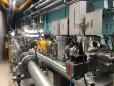
MEX Hutch A

Medium Energy X-ray Absorption Spectroscopy Beamline (MEX-1 and MEX-2)

The Medium Energy- X-ray Absorption Spectroscopy beamlines will provide access to XANES and EXAFS data from a bending magnet source, optimised for cutting-edge applications in biological, agricultural and environmental science in an energy range that is not currently available at the Australia Synchrotron.

OPAL Reactor Core

What are radioisotopes?

Radioisotopes are widely used in medicine, industry, and scientific research. New applications for radioisotopes are constantly being developed.

Health products customer update archive

Archive

See details of previously published customer updates from our Health products team. 

High Performance Macromolecular Crystallography Beamline (MX3)

High Performance Macromolecular Crystallography Beamline (MX3)

The High Performance Macromolecular Crystallography beamline will enable the study of very small (sub-5 micrometre) or weakly diffracting crystals, providing a state-of-the-art high-throughput facility for researchers. MX3 will be able to study the structures of large proteins and protein complexes for virology, drug design and industrial applications via goniometer mounted crystals, in-tray screening, or via serial crystallography methods.

Pagination