Safeguarding Australia's healthcare sector with a new nuclear medicine facility
ANSTO today welcomed a significant Federal Government funding allocation to further safeguard the production of life-saving nuclear medicines in Australia.


Showing 21 - 40 of 208 results
ANSTO today welcomed a significant Federal Government funding allocation to further safeguard the production of life-saving nuclear medicines in Australia.

You are invited to submit to the various awards from ANSTO, User Advisory Committee (UAC) and Australian Neutron Beam User Group (ANBUG).


This scholarship recognises outstanding ability and promise in the field of nuclear science and technology, specifically as it applies to nuclear energy. Successful applicants will demonstrate a history of interest in nuclear energy and a desire to continue this interest.

Archive of ANSTO research publications, seminars and short talks.

ANSTO's Sydney locations are home to the Open Pool Australian Light-water (OPAL) multi-purpose reactor, the Centre for Accelerator Science (CAS), the Australian Centre for Neutron Scattering, the National Research Cyclotron and the National Deuteration Facility.
With the screening of the popular HBO series about Chernobyl, we asked our Nuclear Analysis team for their insights on key differences between the reactor in the TV series, a Generation II RBMK power reactor and ANSTO’s state of the art research reactor OPAL.
Datasets from the Aerosol Sampling Program.

The Australian Synchrotron provides funding support for successful beamtime applicants in the form of travel funding and/or onsite accommodation. Travel funds granted are to be used solely to cover the majority of the cost to travel to the AS facility. The User Office will book accommodation for interstate user groups at the onsite AS Guesthouse.

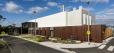
Frequently asked questions on the Mo-99 Manufacturing Facility and the ANSTO Nuclear Medicine project.

Publications, posters and conference presentations for fire impacts reconstructed from a southwest Australian stalagmite.

Highlights of the Energy Materials Project.
Consortium will map the 86 billion nerve cells, 100 trillion connections and neurotransmitters in the human brain.