
Beamline Scientist - BioSAXS


Showing 21 - 40 of 362 results
ANSTO is privileged to be home to an incredible array of outstanding women in science. On the International Day of Women and Girls in Science we wanted to thank each one. Thank you!
Electron and X-ray diffraction techniques provide insights into material damage under stress-strain conditions.

Researchers from Murdoch University and associated collaborators are using ANSTO’s unique nuclear capabilities to gain detailed information about how wheat crops take in administered micronutrients to maximise their efficient use.

ANSTO has a full suite of mineralogical, chemical and hydrometallurgical facilities from laboratory through to pilot scale.
Stronger research link with IAEA with the establishment of Collaborating Centre at ANSTO to support environment and cultural heritage activities
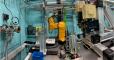
With enhanced submicron spatial resolution, speed and contrast, the Micro-Computed Tomography beamline opens a window on the micron-scale 3D structure of a wide range of samples relevant to many areas of science including life sciences, materials engineering, anthropology, palaeontology and geology. MCT will be able to undertake high-speed and high-throughput studies, as well as provide a range of phase-contrast imaging modalities.

The Advanced Diffraction and Scattering beamlines (ADS-1 and ADS-2) are two independently operating, experimentally flexible beamlines that will use high-energy X-ray diffraction and imaging to characterise the structures of new materials and minerals.
Highlighting the contribution of four inspirational ANSTO leaders on International Women's Day.
ANSTO has recently concluded up a successful cross-cultural nuclear science education project between Australia and Japan.

The Minerals consultancy group at ANSTO has expertise in chemical engineering, metallurgy, mineralogy, chemistry, geology, and radiation safety. We can support our client's project by providing process development services, technical review, and research.
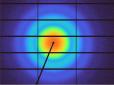
The Biological Small Angle X-ray Scattering beamline will be optimised for measuring small angle scattering of surfactants, nanoparticles, polymers, lipids, proteins and other biological macromolecules in solution. BioSAXS combines combine a state-of-the-art high-flux small angle scattering beamline with specialised in-line protein purification and preparation techniques for high-throughput protein analysis.
ANSTO's reactor utilisation team has received an international award.
Grant supports development of handheld technology to verify origin of seafood.
Combining resources and expertise to address climate change in the Asia-Pacific

Our experienced team of engineers, metallurgists, chemists and scientists have a proven track record of working with our clients in Australia and around the world to design and evaluate novel flowsheets and improve established processes.
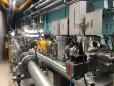
The Medium Energy- X-ray Absorption Spectroscopy beamlines will provide access to XANES and EXAFS data from a bending magnet source, optimised for cutting-edge applications in biological, agricultural and environmental science in an energy range that is not currently available at the Australia Synchrotron.