

Showing 1 - 20 of 81 results
Neutron scattering helping conserve the world’s great historic monuments
About the ANSTO Hackathon
Collaborative research brings new insights into radioactive waste, nuclear fuel and nuclear waste forms
ANSTO researchers have demonstrated longstanding expertise in the study of nuclear fuel and radioactive waste with two recent journal articles in a special issue of Frontiers of Chemistry.
National Science Week: Success with virtual events
Virtual activities celebrating the benefits of nuclear science and technology held for National Science Week
Australia’s best and brightest nuclear scientists recognised in 2018 ANSTO Awards
The ANSTO Awards in Nuclear Science and Technology 2018 were presented on Friday 2 November at The Australian Museum, and showcased ANSTO’s unique nuclear science and technology capabilities, which enable progress in the key areas of health research and innovation for industry.
Feathery moa’s fossilised footprints, ancient age revealed
ANSTO scientist, Dr Klaus Wilcken of the Centre for Accelerator Science, used cosmogenic nuclide dating to determine the ages of layered sand and gravel samples, in which seven footprints of the flightless bird, the moa, were found on the South Island in New Zealand in 2019.
Snaphot of molecular mechanism at work in lethal virus
X-ray crystallography at the Australian Synchrotron contributed to major research findings.
Cancer drug development to be turbocharged as ACRF funding brings ‘broadband’ protein analysis to Australia

Science Series Webinars
The ANSTO Science Series is a live and virtual meet-up that focuses on the key capacities of ANSTO’s people, partners and facilities and how they are meeting global challenges in sustainable industries, medicine, advanced manufacturing and in accelerating small business.
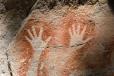
How climate change is erasing the world’s oldest rock art
Australasia is home to some of the oldest rock art motifs in the world. In tropical latitudes, due to climate change, the rock art deterioration is accelerating.
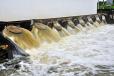
Removal of dangerous contaminants from dirty water
A group from Monash university has sought to make a new innovative nano-porous sieve material which has the potential to be produced on a global scale and is effective for a much longer time.
Leading review confirms Australia's world-class credentials in nuclear safety and security
ANSTO has just completed the largest coordinated safety and security review of the OPAL multi-purpose research reactor, as part of a new a world-leading approach to assessing performance

Radiotracer Methods and Organic Chemistry Task Leader
Role at ANSTO
Superheroes and super science holiday activities for the kids
Water experts share insights into unique environment of Thirlmere Lakes
ANSTO has produced a comprehensive report for the NSW Department of Planning and Environment that represents a significant scientific investigation of the connections, pathways and processes of water loss from the Thirlmere Lakes system.
Students tackle a real-world challenge regarding dissimilar-metal corrosion in a project supported by BlueScope
Inspiration from Dharawal educator
Dharawal educator Fran Bodkin has spent a good part of her eighty plus years, studying or sharing information about the therapeutic and nutritional properties of traditional indigenous plants and wildlife.
Exceptional group of women at the forefront of science outreach at ANSTO
Five exceptional female science communicators are part of a larger team who use skills in education and engagement to promote an interest in science amongst the public and students.
Nobel Prizes recognise insights at molecular and atomic scale
The Nobel Prizes for Physics, Chemistry and Medicine have been announced.